



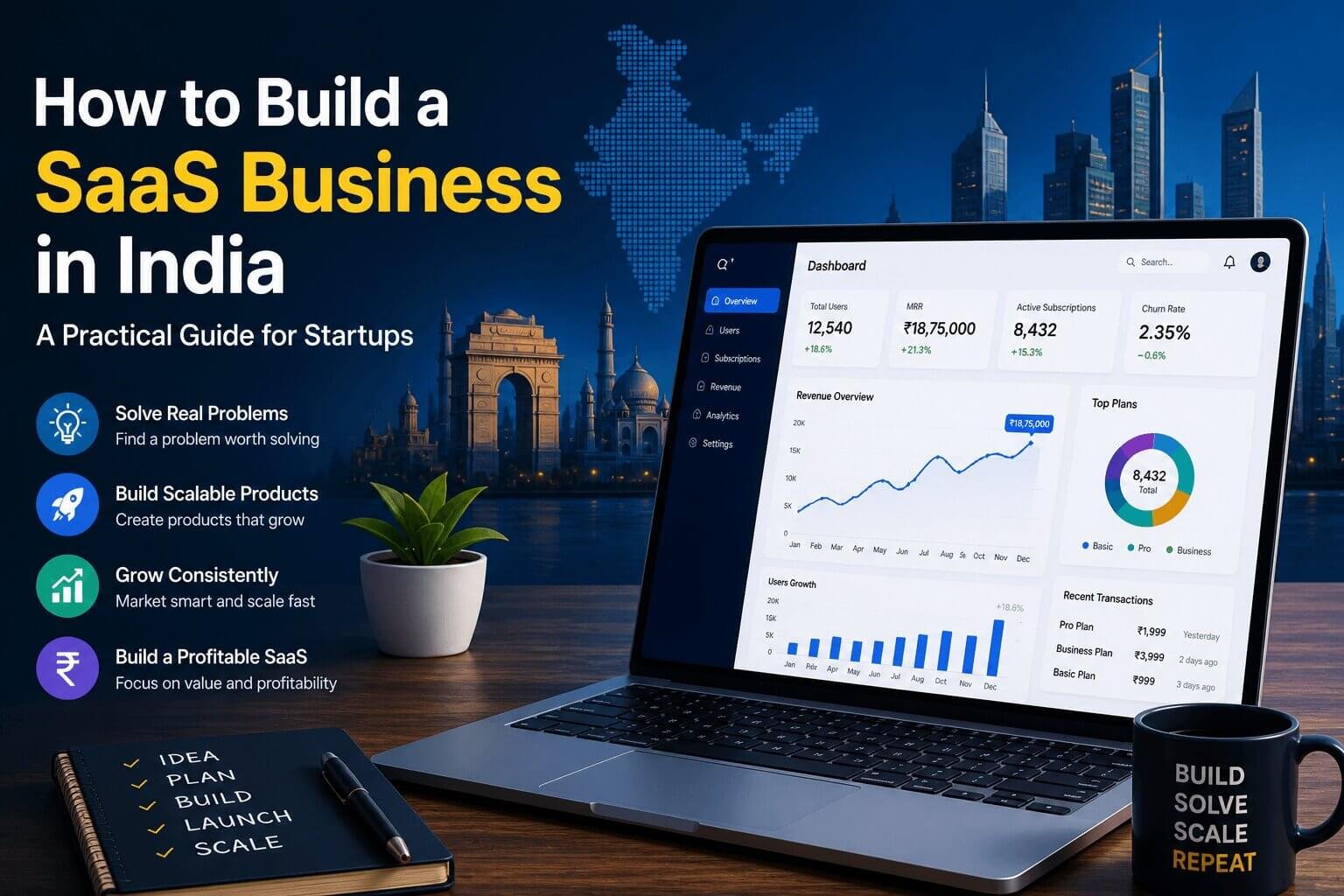
Building a SaaS (Software as a Service) business in India is one of the most promising opportunities today. With increasing internet penetration, affordable cloud infrastructure, and a growing startup ecosystem, India has become a strong base for launching scalable software products.
This guide walks through the complete process—from idea validation to scaling—based on practical execution rather than theory.
1. Identify a Real Problem Worth Solving
Most SaaS products fail because they are built around ideas, not real problems.
Focus on:
- Businesses struggling with manual processes
- Repetitive tasks that can be automated
- Industries with poor software adoption (local businesses, agencies, SMEs)
Examples:
- Social media automation tools
- CRM for small businesses
- AI content tools
- Accounting or compliance tools for Indian startups
Talk to potential users before writing code. If people are not willing to pay, the idea is not strong enough.
2. Validate Before You Build
Do not start development immediately.
Validate using:
- Landing page with pricing
- Waitlist or early signup form
- Cold outreach (email, WhatsApp, LinkedIn)
- Posting in communities
If users show interest or sign up, you have validation. If not, refine the idea.
3. Build a Lean MVP
Your first version should not be perfect. It should be functional.
Focus only on:
- Core feature solving the main problem
- Simple UI
- Basic onboarding
Tech stack (common in India SaaS):
- Frontend: Next.js or React
- Backend: Node.js, PHP (CodeIgniter), or Python
- Database: PostgreSQL or MySQL
- Hosting: VPS, Docker, or cloud providers
Avoid overengineering. Speed matters more than perfection at this stage.
4. Pricing Strategy for Indian Market
Pricing is critical in India because users are price-sensitive.
Start with:
- ₹199–₹999/month plans
- Freemium or trial model
- Annual discount (to improve cash flow)
Offer clear value:
- Save time
- Increase revenue
- Reduce effort
Avoid very low pricing unless you have high volume.
5. Payment Integration
You need reliable payment gateways for Indian users.
Popular options:
- Razorpay
- Cashfree
- PayU
Ensure:
- UPI support
- Subscription billing
- Easy refunds
Also consider international payments if targeting global users.
6. Legal and Compliance
To build trust and scale, you should structure your business properly.
Options:
- Sole Proprietorship (early stage)
- Private Limited Company (recommended for scaling)
Important:
- GST registration
- Terms of Service and Privacy Policy
- Proper invoicing
If you plan to raise funding, a Private Limited structure is almost necessary.
7. Distribution and Marketing
A good product without distribution will fail.
Focus on:
- SEO (blog content around your niche)
- Social media (especially LinkedIn and Instagram)
- Cold outreach (highly effective in India)
- Communities and forums
Content strategy:
- Tutorials
- Problem-solving blogs
- Comparison articles
- Case studies
Turn one feature into multiple pieces of content.
8. Build in Public and Create Trust
People buy from brands they trust.
Do this:
- Share product updates
- Show real use cases
- Post customer results
- Be active on social platforms
Trust is a major factor in Indian SaaS adoption.
9. Customer Support is a Growth Lever
In India, support can be your competitive advantage.
Provide:
- Fast WhatsApp support
- Simple onboarding
- Video tutorials
- Quick issue resolution
Satisfied users bring referrals, which reduces your acquisition cost.
10. Scale with Automation
Once you get initial traction:
- Automate onboarding
- Automate marketing workflows
- Improve performance and infrastructure
- Add analytics and tracking
At this stage, focus on:
- Retention
- Upselling
- Reducing churn
11. Common Mistakes to Avoid
- Building without validation
- Overcomplicating the product
- Ignoring distribution
- Pricing too low
- Not talking to users
Execution matters more than ideas.
Conclusion
Building a SaaS business in India is highly achievable if approached correctly. The key is to start small, validate early, and focus on solving real problems.
India offers a massive opportunity due to its growing digital economy, but success depends on execution, consistency, and understanding your users.
If you combine product development with strong distribution and clear positioning, you can build a sustainable and scalable SaaS business.